Multicellular animals with a crown of cilia and a forked foot. A sign of older, stable sludge.
Sketch: rotifers as typically seen at 100x to 400x. Not to scale.
Under the microscope
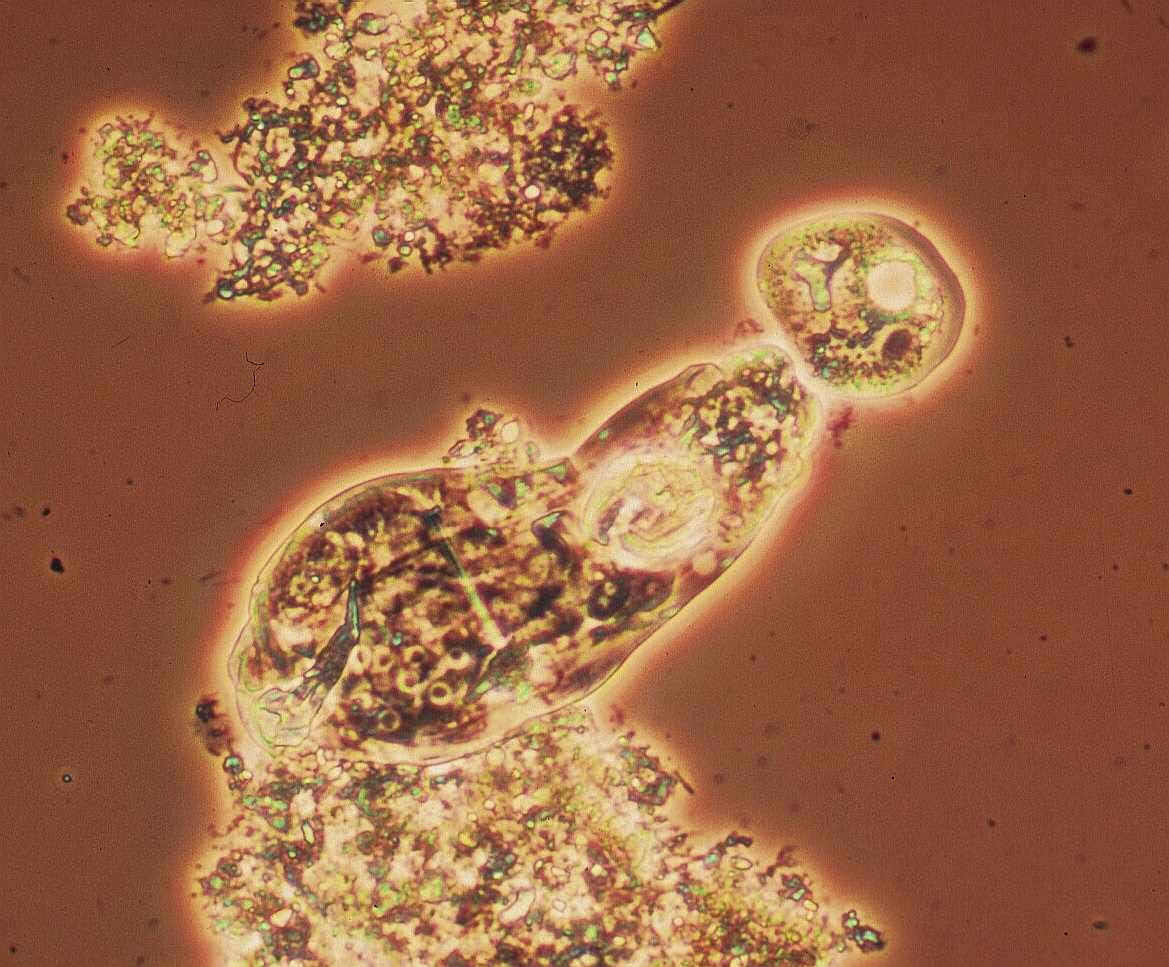
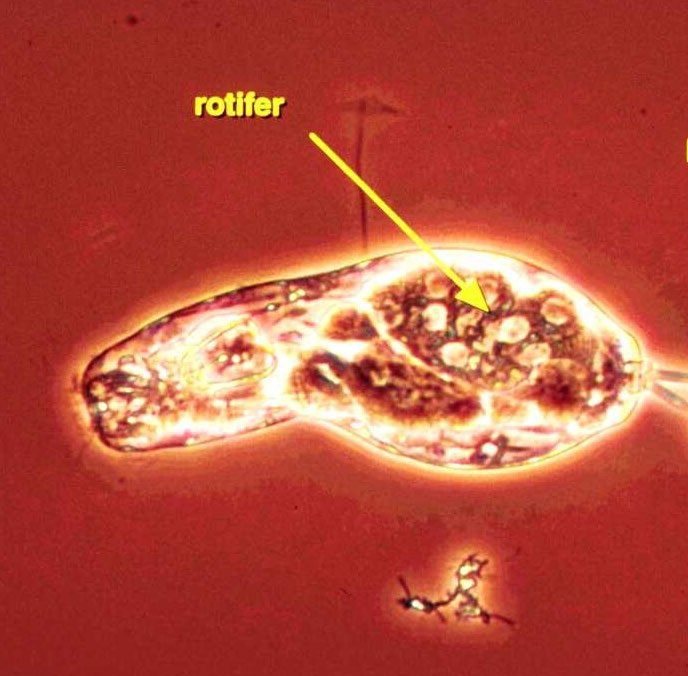
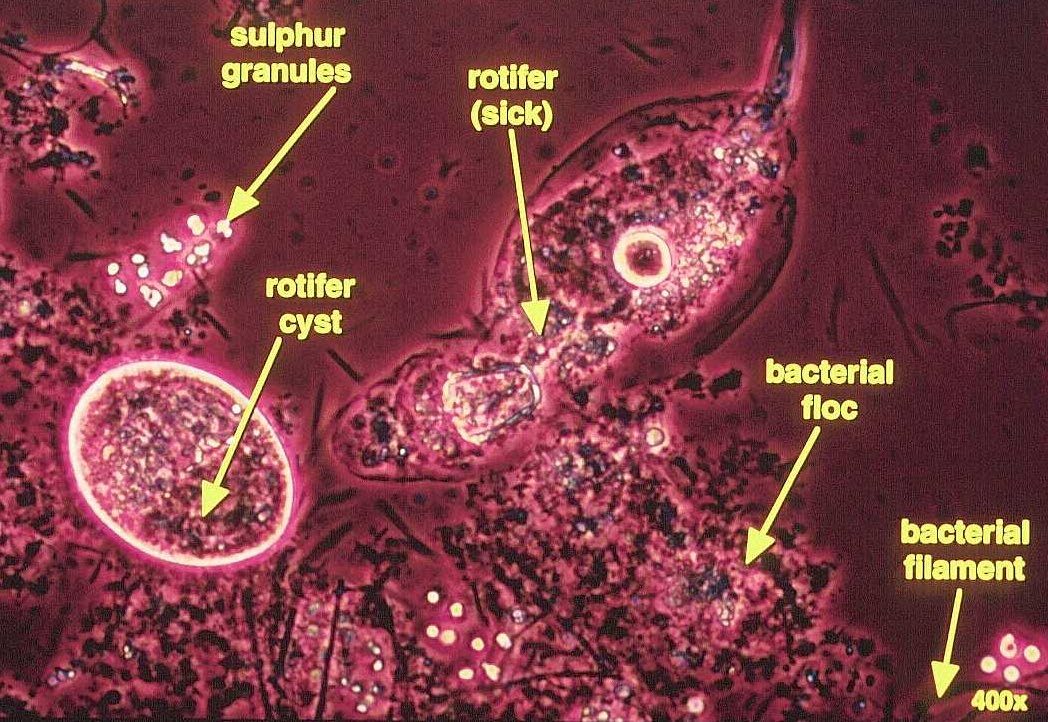
Rotifer on floc. Rotifer anchored to a floc by its foot. Phase contrast, 400x. What this indicates: Active rotifers point to a mature, stable sludge at moderate to long SRT.Rotifer. Rotifer showing its internal organs. Phase contrast. What this indicates: Rotifers need stable conditions. Large numbers with small, dense floc can mean the SRT is very long.Rotifer and cyst, sulfide toxicity. Sick rotifer and a rotifer cyst with sulfur granules nearby, from a plant with sulfide toxicity. Phase contrast, 400x. What this indicates: Rotifers forming cysts or losing activity, with sulfur granules on the slide, point to sulfide or another toxic stress. Check septicity and influent sulfide.
Photomicrographs from Brad Musick's microscope slide collection.
Higher life forms. Rotifer, nematode, bristle worm (Aeolosoma) and water bear (tardigrade), with typical sizes. What this indicates: These multicellular animals grow slowly, so steady numbers usually mean a long SRT and a stable, well oxidized sludge.Original illustration for this site, not to scale.