Size, shape, strength and background clarity of activated sludge floc.
Sketch: floc structure as typically seen at 100x to 400x. Not to scale.
Under the microscope
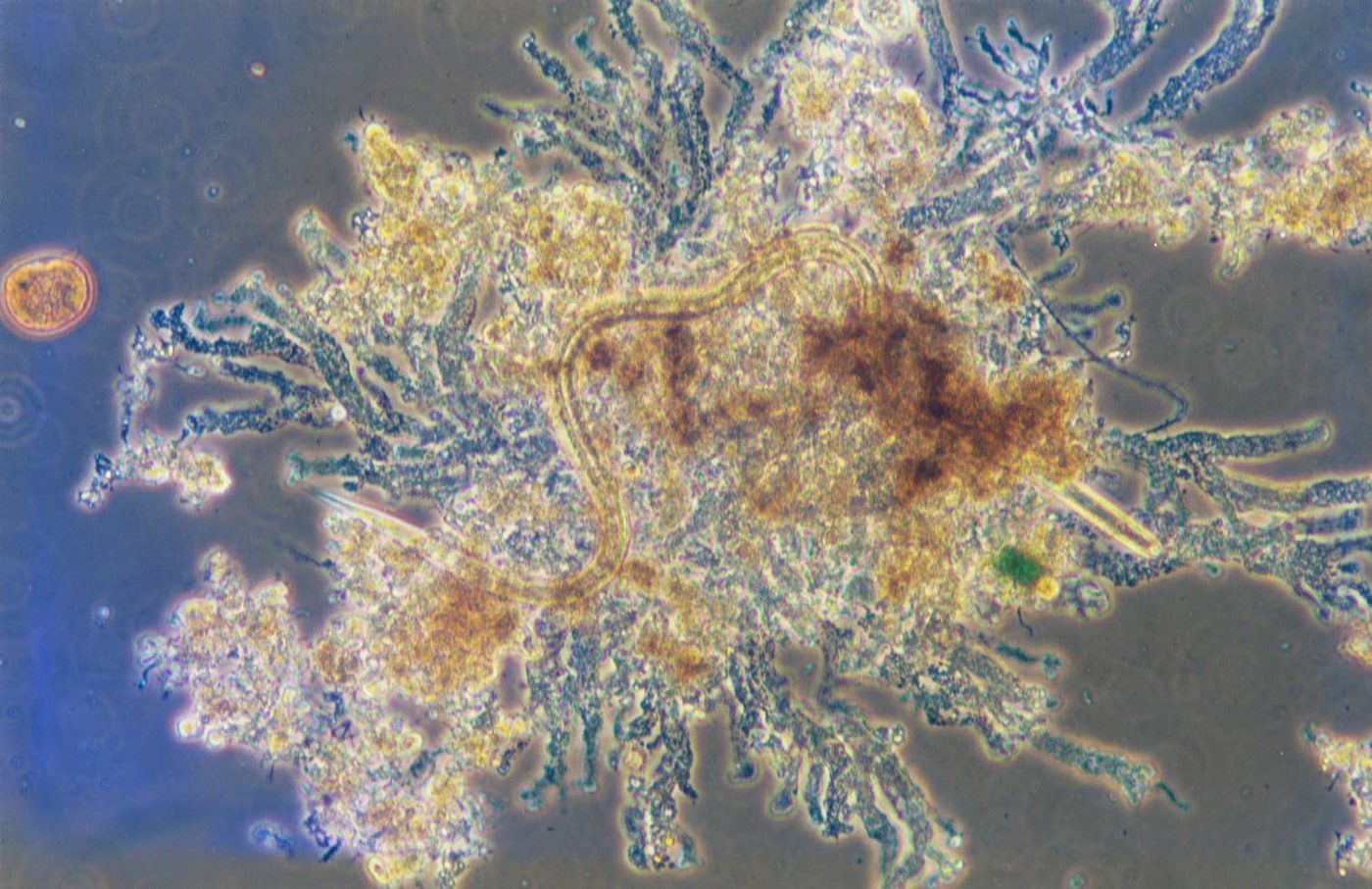
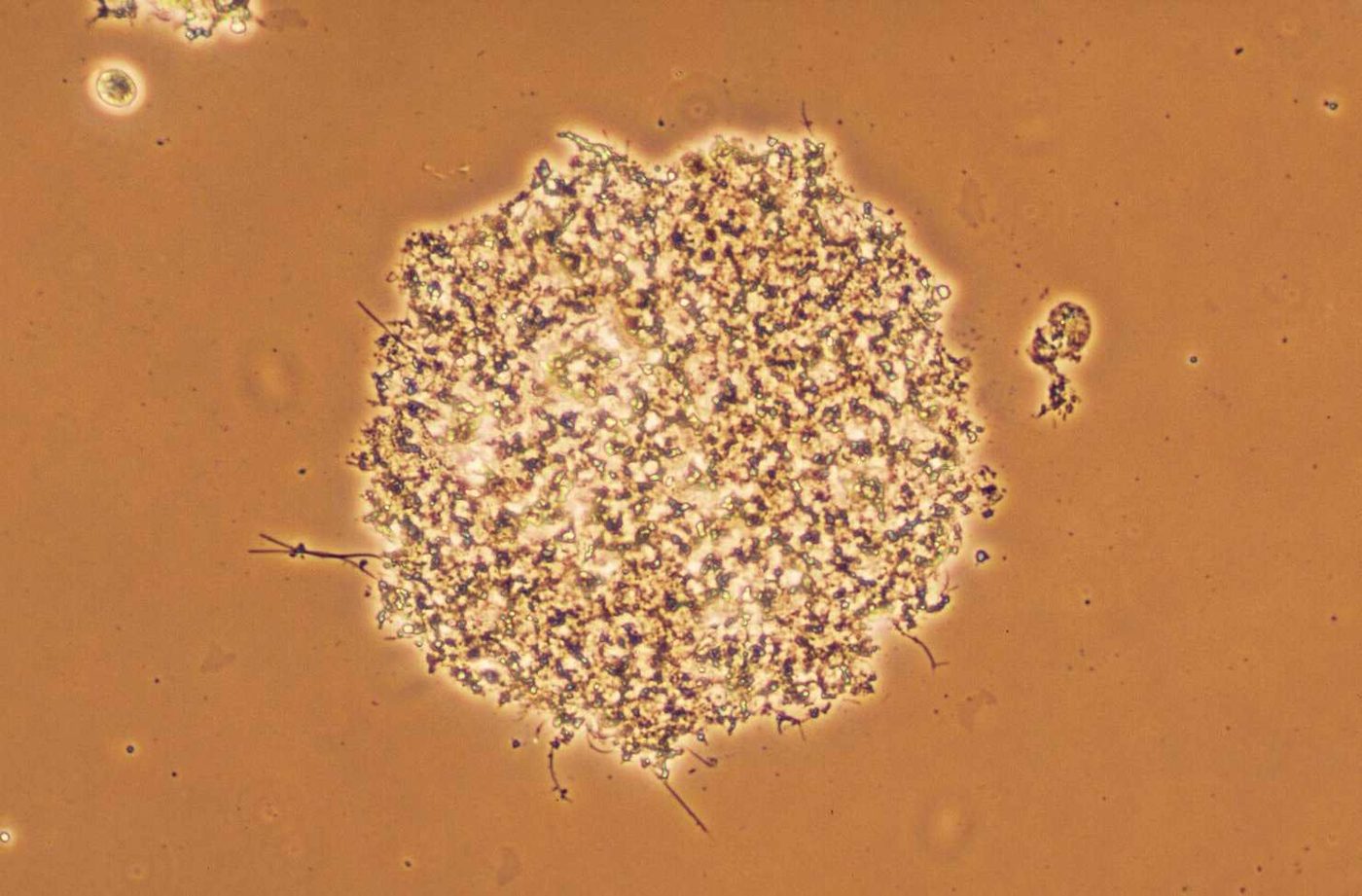
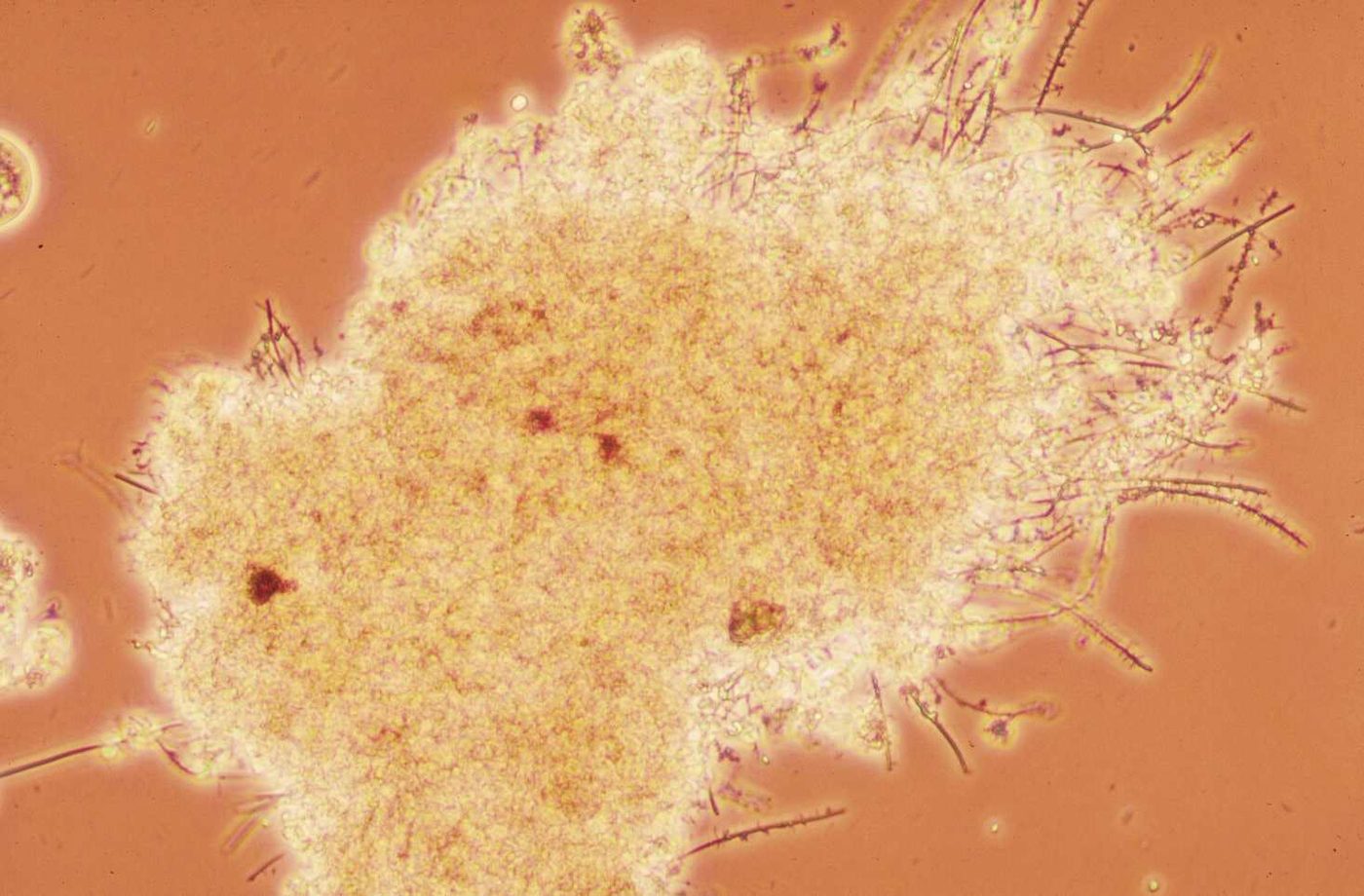
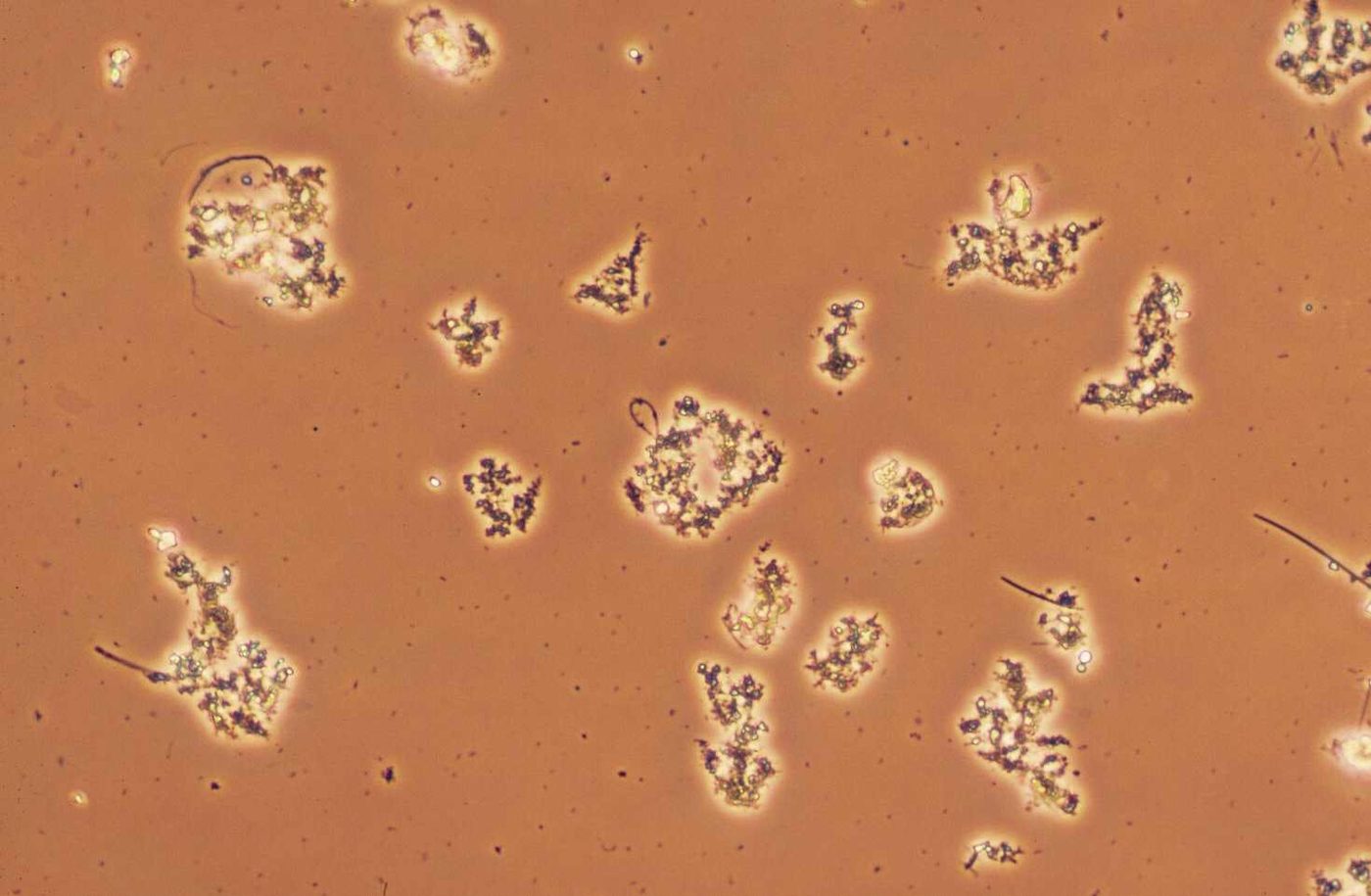
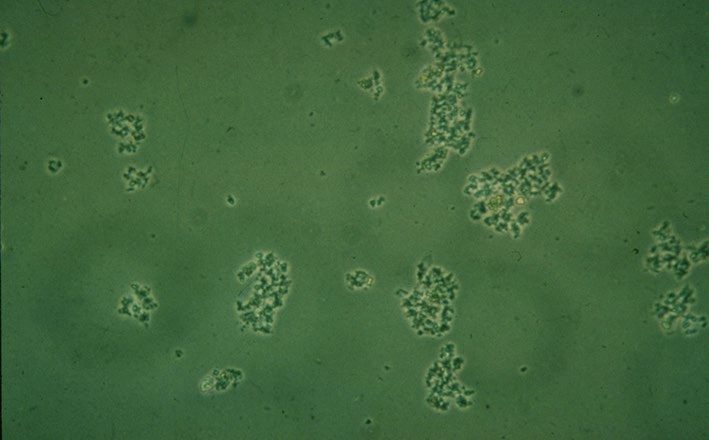
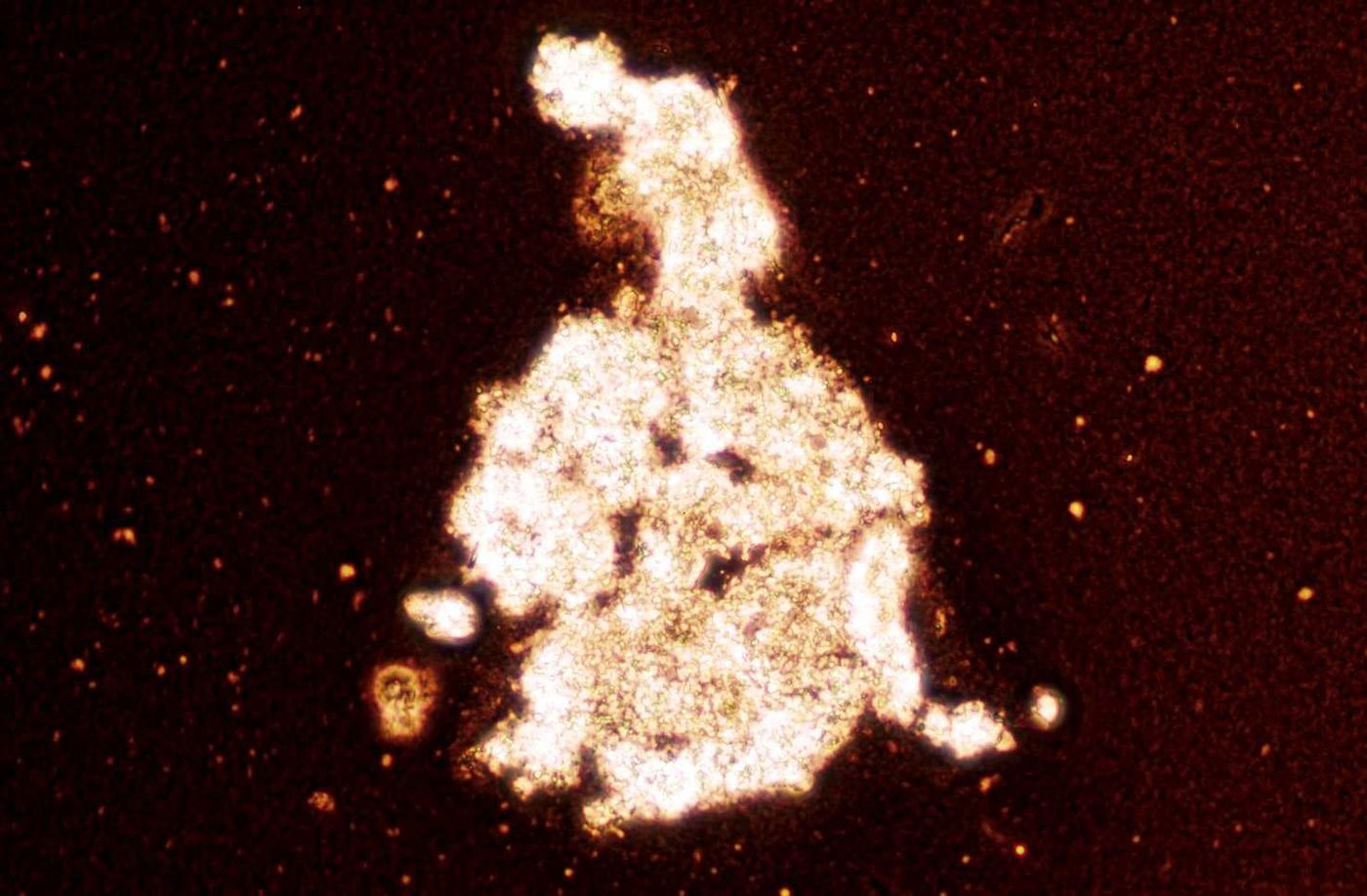
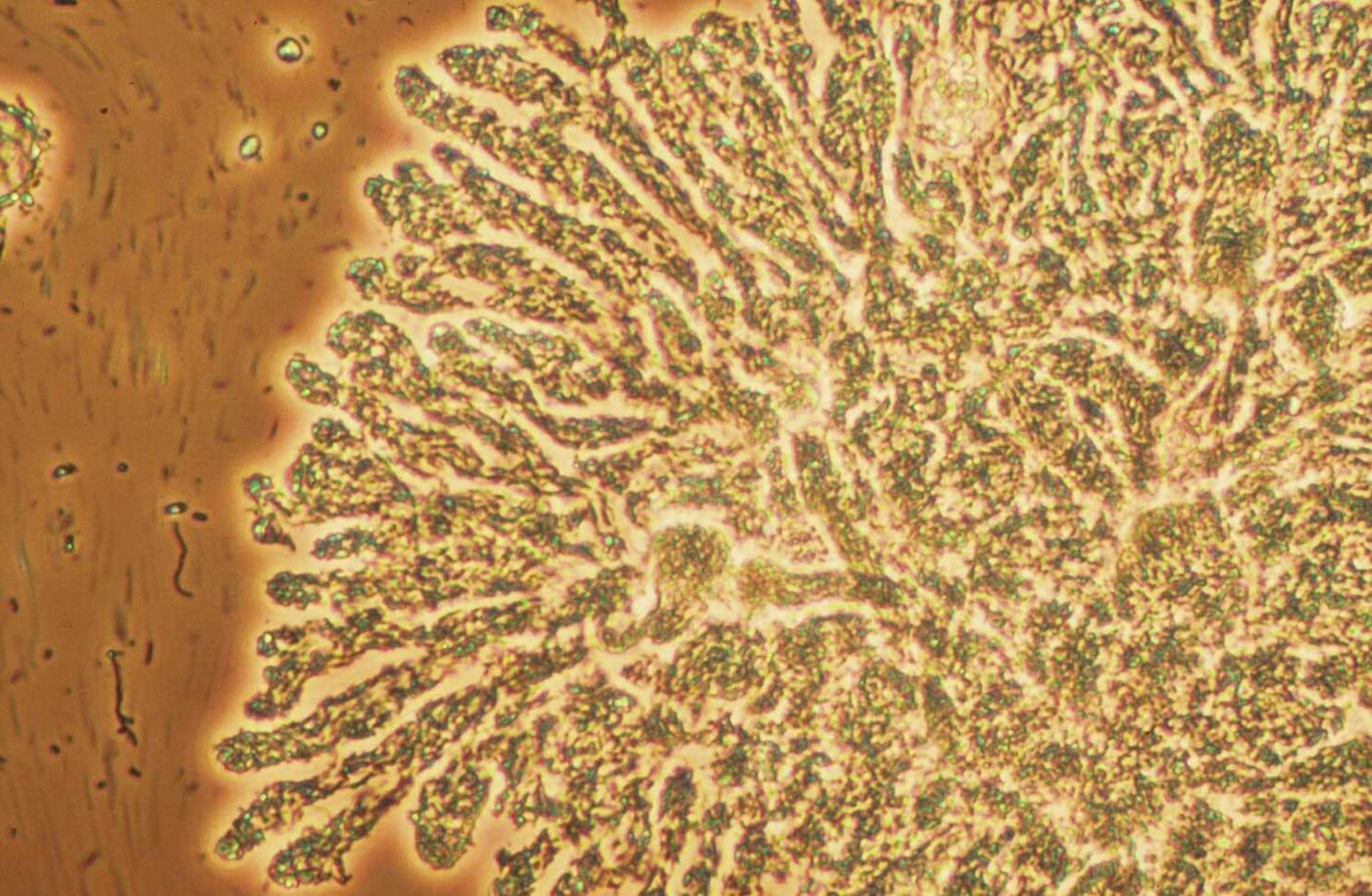
Fingered Zoogloea and nematode. Fingered Zoogloea with a nematode in the same floc. Phase contrast. What this indicates: Fingered Zoogloea grows in high F/M systems where food is soluble or easily degraded and pH is low. Nematodes go with an older sludge.Compact floc. Round, firm floc with few extending filaments and a clear background. Phase contrast. What this indicates: Firm floc with a clear background settles well. If all the floc is this small and round, watch for pin floc.Floc with extending filaments. Large floc with filaments growing out past its edges. Phase contrast. What this indicates: Filaments extending from floc are an early bulking warning. Rate their abundance and track SVI.Small, irregular floc. Small, irregular flocs with a clear background. Low power, phase contrast. What this indicates: Small floc settles slowly and may leave a hazy supernatant. Compare with the settleometer.Pin floc. Pin floc: small, compact particles scattered across the slide. What this indicates: Pin floc occurs at long sludge ages. SVI is often low but the supernatant is turbid.India ink stain. India ink reverse stain of a floc. 100x. What this indicates: Ink fills the background. Large clear areas inside the floc show excess exocellular slime, a sign to check for viscous bulking and nutrient deficiency.Fingered Zoogloea. Fingered Zoogloea. 400x. What this indicates: Found in high F/M systems with soluble, easily degraded food and low pH. It can cause viscous bulking.
Photomicrographs from Brad Musick's microscope slide collection.
Inside a healthy floc. Floc forming rods held in sticky EPS around a short filament backbone, with trapped particles and stalked ciliates on the edge. What this indicates: Firm, irregular floc with a few internal filaments and a clear background settles well and leaves a clear supernatant.Original illustration for this site, not to scale.Healthy floc, bulking and pin floc. Three 100x views, each with its 30 minute settleometer result. What this indicates: Filaments bridging flocs mean high SVI and slow settling; tiny, filament free pin floc settles fast but leaves a cloudy supernatant, often from too long an SRT.Original illustration for this site, not to scale.