A free process control resource from Wastewater Solutions, Inc.help@ActivatedSludge.com  |  503-701-2766
ActivatedSludge.comPractical wastewater process control

Dispersed Growth

Bacteria growing as single cells or tiny clumps instead of floc. Cloudy effluent.

Dispersed growth sketchMany single bacteria and tiny clumps spread through the liquid with very little floc.Line sketch for orientation only. Not to scale.
Sketch: dispersed growth as typically seen at 100x to 400x. Not to scale.

Under the microscope

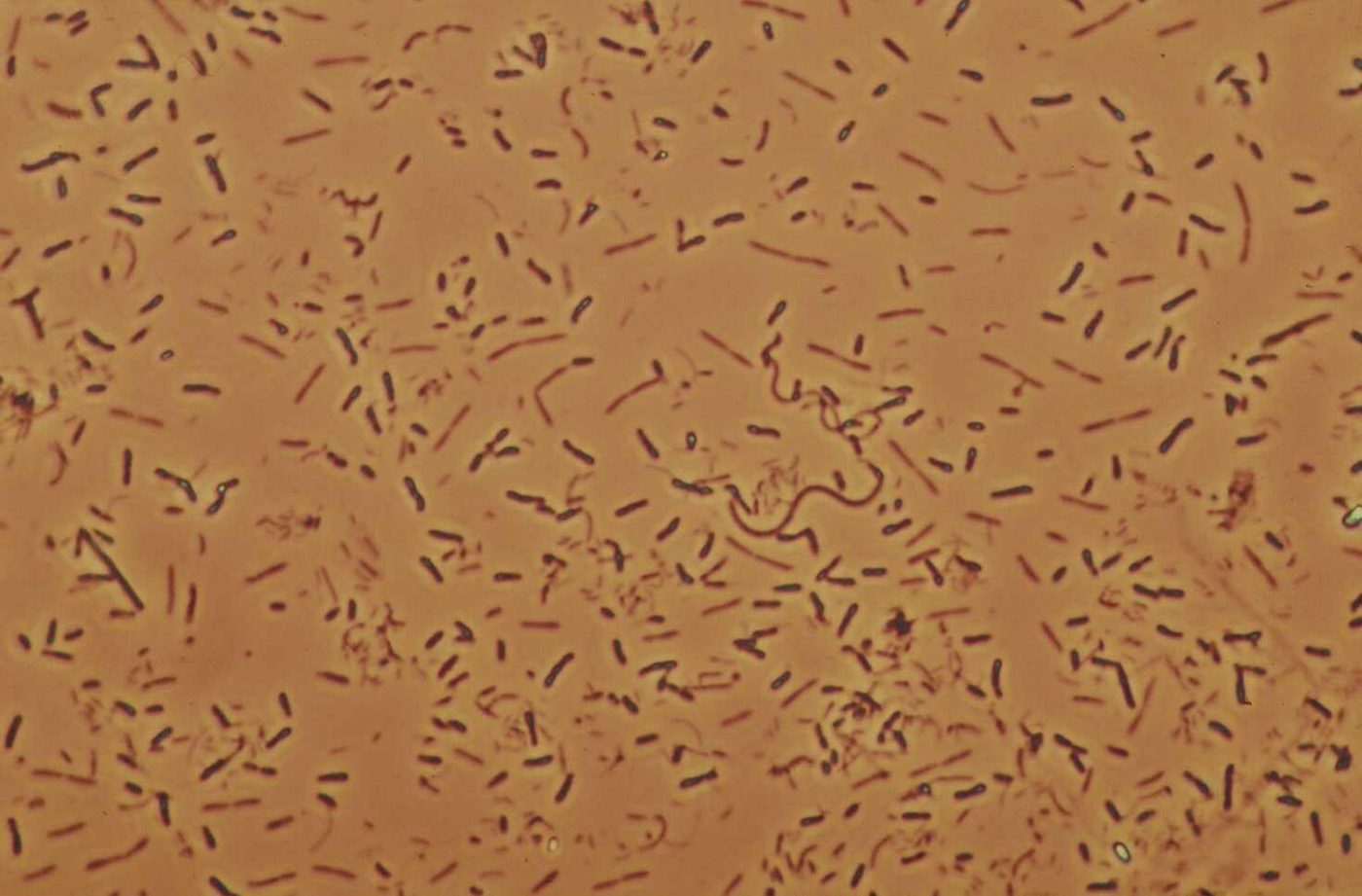
Field of single rod shaped bacteria with no floc
Dispersed bacteria. Single, dispersed bacteria with almost no floc. What this indicates: This will not settle. Dispersed growth means young sludge, a high soluble load or toxicity breaking floc apart.
Small floc particles carrying over a clarifier weir
Straggler floc in the clarifier. Straggler floc carrying over the clarifier weirs. What this indicates: Straggler floc can be hard to tell from pin floc under the microscope. The settling test shows poor settling and a ragged interface.

Photomicrographs from Brad Musick's microscope slide collection.

See all 53 photos in the gallery

Illustrated

Dispersed growth compared with healthy flocLeft: a firm floc in clear liquid with a stalked ciliate, and a settleometer with a clear supernatant. Right: many single bacteria and tiny clumps with a free-swimming ciliate and a flagellate, and a settleometer that stays cloudy.Dispersed growth compared with healthy floc30 min30 minHealthy flocFirm floc, clear liquid, stalked ciliatesClear supernatantDispersed growthSingle cells and tiny clumps, free swimmers and flagellatesCloudy supernatant that does not clear
Dispersed growth compared with healthy floc. A healthy floc field next to a field full of single cells and tiny clumps, with their settleometers. What this indicates: Dispersed growth points to a very young sludge, toxicity, high load or low DO. Expect turbid effluent until floc reforms. Original illustration for this site, not to scale.

See all microscopy illustrations

What you see

  • A cloudy background full of single bacteria and tiny clusters between (or instead of) floc.
  • Few protozoa except flagellates and free swimmers.
  • Settleometer: turbid supernatant that does not clear.

What it may indicate

  • Very young sludge or startup.
  • High soluble BOD load.
  • Toxicity that breaks floc apart.
  • Low DO or low pH.
  • High monovalent to divalent cation ratio.

What process data to check next

  • SRT and F/M.
  • Influent pH, conductivity and any industrial discharge.
  • OUR and SOUR.
  • DO.
  • Effluent turbidity and TSS trend.
One slide is a snapshot. Look at trends over several days and compare with SRT, F/M, DO, SVI and effluent quality before you change anything.