A free process control resource from Wastewater Solutions, Inc.help@ActivatedSludge.com  |  503-701-2766
ActivatedSludge.comPractical wastewater process control

Nematodes

Small, thrashing roundworms. Usually long SRT and stable conditions.

Nematode sketchA long smooth roundworm moving with a whip-like motion.Line sketch for orientation only. Not to scale.
Sketch: nematodes as typically seen at 100x to 400x. Not to scale.

Under the microscope

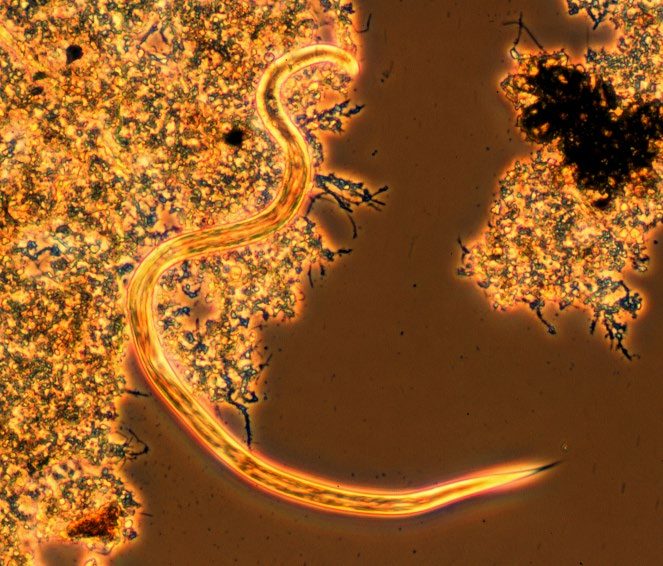
Slender nematode worm moving between flocs, phase contrast
Nematode. Nematode moving between flocs. Phase contrast. What this indicates: Nematodes are usually a sign of long SRT and stable conditions, common in extended aeration.
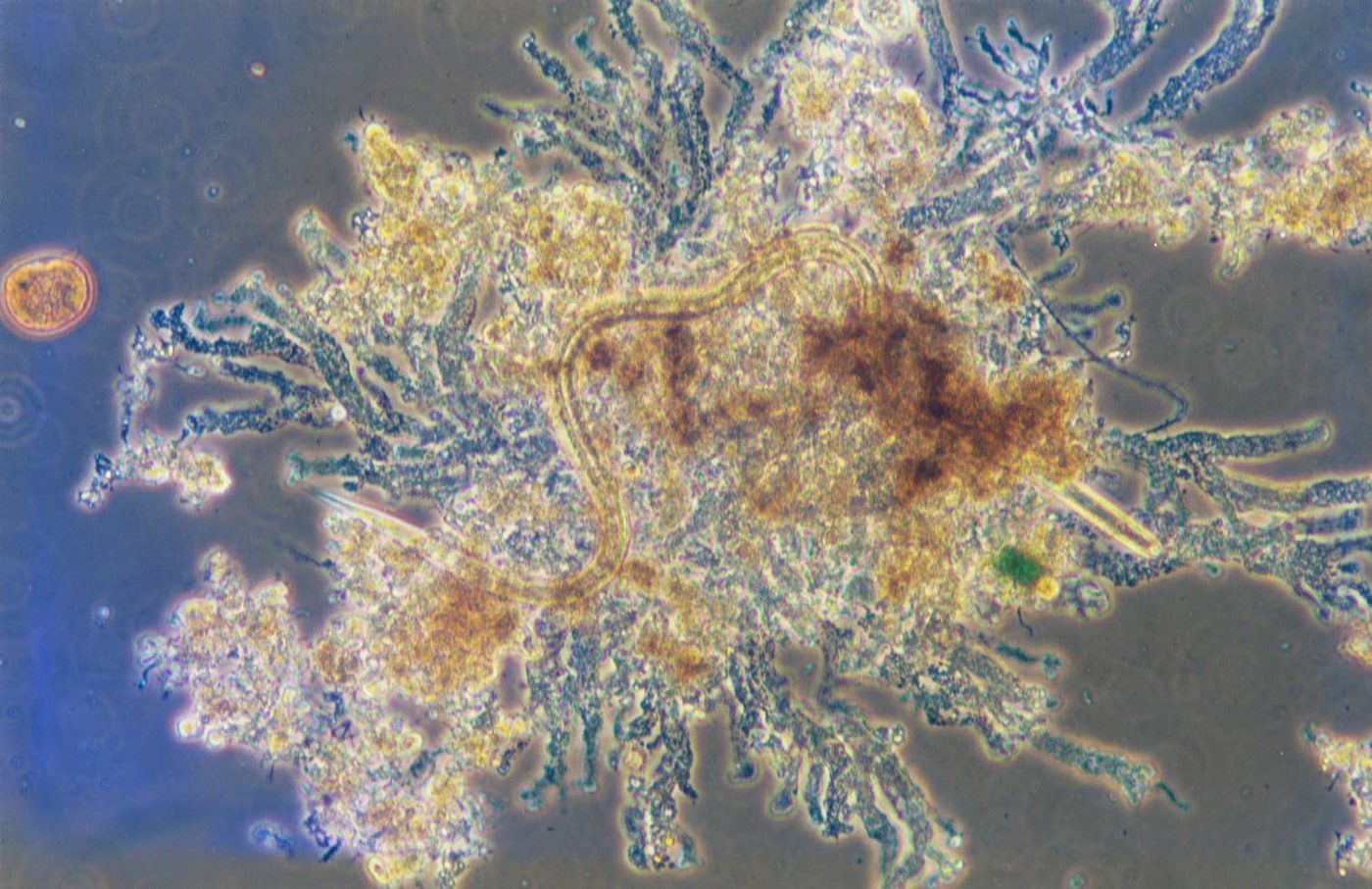
Floc with finger like Zoogloea growth and a nematode inside it, phase contrast
Fingered Zoogloea and nematode. Fingered Zoogloea with a nematode in the same floc. Phase contrast. What this indicates: Fingered Zoogloea grows in high F/M systems where food is soluble or easily degraded and pH is low. Nematodes go with an older sludge.
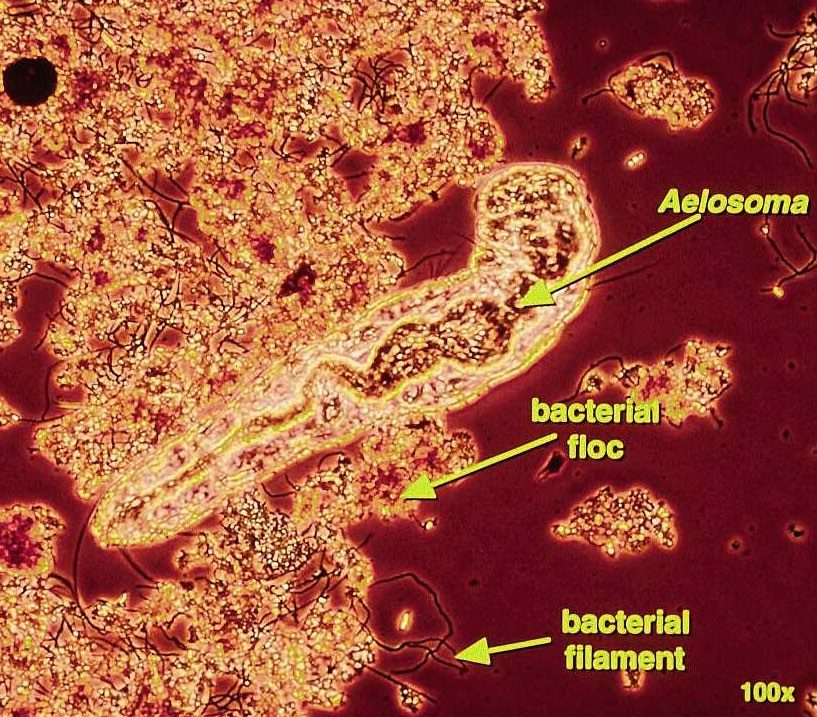
Aeolosoma bristle worm among bacterial floc and filaments, labeled, phase contrast at 100x
Bristle worm (Aeolosoma). Aeolosoma, a segmented bristle worm, among floc and filaments. Phase contrast, 100x. What this indicates: Bristle worms, like nematodes, are higher life forms that point to an older, stable sludge.

Photomicrographs from Brad Musick's microscope slide collection.

See all 53 photos in the gallery

Illustrated

Higher life formsFour panels: a rotifer with a two lobed ciliated crown and forked foot, a smooth nematode worm, a segmented Aeolosoma bristle worm with bristle tufts and colored spots, and a water bear with eight clawed legs.Higher life forms in activated sludgeRotifer100 to 500 micronsCiliated crown, forked footNematode0.5 to 3 mmSmooth roundworm, thrashesBristle wormAeolosoma, up to 10 mmSegments, bristle tufts, color spotsWater bearTardigrade, 0.1 to 1 mmEight stubby clawed legsAll are multicellular and usually point to an older, stable sludge with a longer SRT.
Higher life forms. Rotifer, nematode, bristle worm (Aeolosoma) and water bear (tardigrade), with typical sizes. What this indicates: These multicellular animals grow slowly, so steady numbers usually mean a long SRT and a stable, well oxidized sludge. Original illustration for this site, not to scale.

See all microscopy illustrations

What you see

  • Slender, unsegmented worms, often 0.5 to 3 mm, moving with a whipping or thrashing motion.
  • Visible at 100x; tapered at both ends.

What it may indicate

  • Long SRT and stable conditions; common in extended aeration.
  • Occasional nematodes are normal in many plants.
  • Large numbers in a conventional plant: SRT may be longer than intended.

What process data to check next

  • SRT trend.
  • Pin floc and effluent turbidity.
  • Oxygen demand (endogenous respiration).
One slide is a snapshot. Look at trends over several days and compare with SRT, F/M, DO, SVI and effluent quality before you change anything.