A free process control resource from Wastewater Solutions, Inc.help@ActivatedSludge.com  |  503-701-2766
ActivatedSludge.comPractical wastewater process control

Flagellates

Small cells moving with one or more whip like flagella. Abundant in young sludge.

Flagellates sketchSmall oval cells each with a long whip-like flagellum.Line sketch for orientation only. Not to scale.
Sketch: flagellates as typically seen at 100x to 400x. Not to scale.

Under the microscope

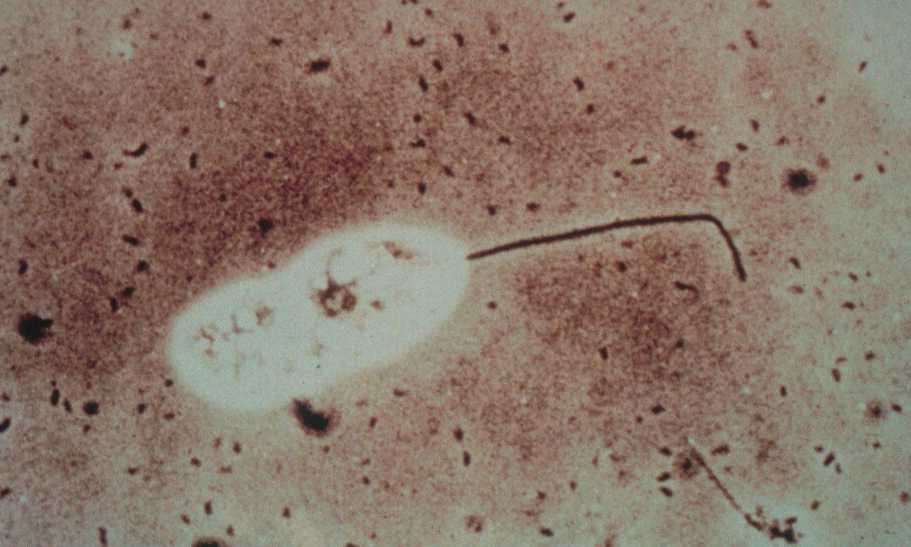
Oval flagellate with one long whip like flagellum among dispersed bacteria, brightfield
Flagellate. Flagellate with its long flagellum among dispersed bacteria. Brightfield. What this indicates: Flagellates with a cloudy, bacteria filled background point to young sludge or a high soluble BOD load.
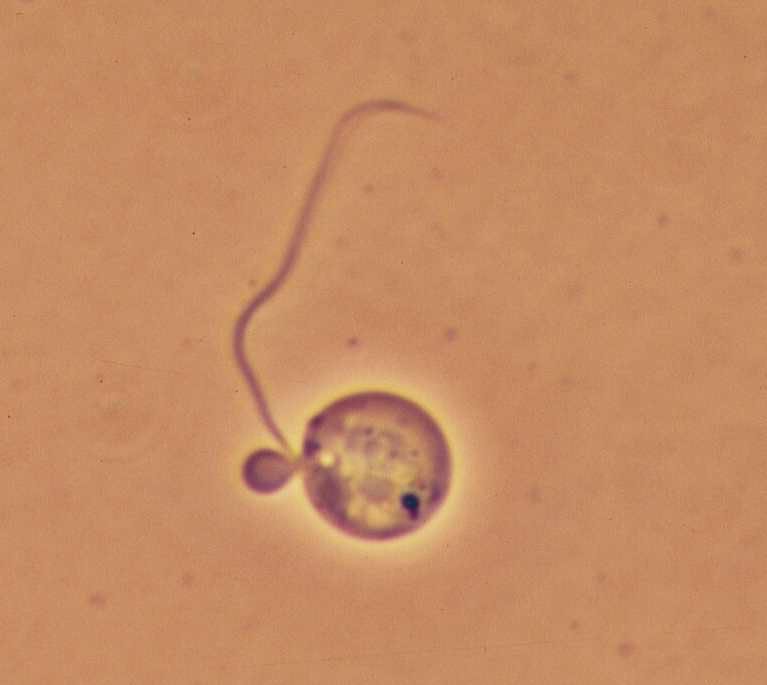
Small round flagellate with one flagellum, brightfield
Small flagellate. Small round flagellate with one flagellum. Brightfield. What this indicates: Small numbers are normal. If flagellates dominate the slide, check F/M, SRT and any recent upset.

Photomicrographs from Brad Musick's microscope slide collection.

See all 53 photos in the gallery

Illustrated

Flagellate size compared with flocA microscope field with a floc and five tiny flagellates around it, with one flagellate enlarged to show its oval body and whip like flagellum.Flagellates are tiny: look at 400x with phase contrastcell body 5 to 20 micronsflagellumDarts or spins; some are green (Euglena)about 100 micronsFloc in the view: 100 to 500 micronsA flagellate is a speck next to it at 100x
How small flagellates are. A 100x field with floc, and a 400x close up of one flagellate with its whip like flagellum. What this indicates: Flagellates are easy to miss at 100x. Large numbers at 400x point to high soluble BOD, a young sludge or low DO. Original illustration for this site, not to scale.

See all microscopy illustrations

What you see

  • Small (often 5 to 20 microns) cells that dart or spin, propelled by one or more flagella.
  • Hard to see at 100x; best at 400x with phase contrast.
  • Some are green (Euglena) when algae are present.

What it may indicate

  • Large numbers: young sludge, high soluble BOD, startup, recovery, or a high load.
  • Also common after toxic events or low DO, as more sensitive organisms are lost.
  • Small numbers are normal in most sludges.

What process data to check next

  • F/M and soluble BOD.
  • SRT (too low?).
  • DO.
  • Recent toxic event or washout.
One slide is a snapshot. Look at trends over several days and compare with SRT, F/M, DO, SVI and effluent quality before you change anything.